


Call us on:
+1 (416) 265-7979
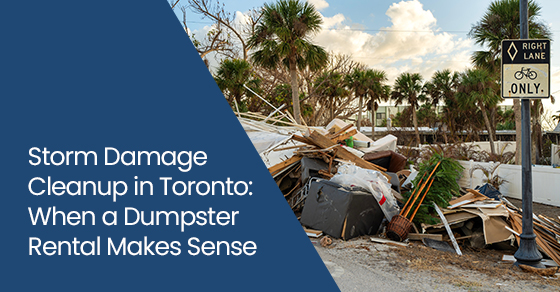
After a major storm, cleanup can become its own project. Homeowners and property managers in Toronto often have to deal with broken branches, damaged fencing, soaked materials, scattered household items, and other debris that builds up quickly. Even when the visible damage seems manageable at first, the amount of material left behind can make cleanup harder, slower, and less safe than expected.
That is where planning matters. Standard curbside pickup is not always enough for storm-related debris, especially when the cleanup involves bulky waste, damaged building materials, or a larger property. A dumpster rental can give you one place to manage the mess efficiently instead of spreading the work across multiple trips and collection days. This article explains when a dumpster rental makes sense after a storm and why it is often the more practical choice for storm cleanup in Toronto.
Storm cleanup moves faster when waste removal is built into the process from the start. Rather than piling debris in different spots or waiting for limited municipal pickup options, a dumpster rental gives you a central place to contain and remove material as the work happens.
That makes it a practical option for cleanup jobs that involve volume, urgency, and changing site conditions. Whether the damage is residential or commercial, having the right disposal setup on-site can make the entire recovery process easier to manage.
Storms can create far more waste than people expect. Tree limbs, shingles, drywall, insulation, damaged furniture, fencing, siding, and soaked materials can add up quickly once cleanup begins. In many cases, the issue is not just the type of debris, but the amount of it.
A dumpster rental helps by giving you one central disposal point instead of relying on repeated trips to a transfer station or trying to break the job into smaller loads. That saves time, keeps the cleanup more organized, and gives you a simpler way to manage debris on-site as you load the bin yourself or through your own contractors. For properties with widespread storm damage, that convenience can make a stressful situation much more manageable.
Cleanup tends to slow down when debris removal becomes a separate problem to solve. Without a container on-site, property owners or contractors may need to stop work, load vehicles, and figure out where each load can go. That interrupts progress and stretches the timeline.
With a dumpster delivered to the property, debris can be cleared as it is collected. The work becomes more continuous, and the site can start moving toward recovery sooner. For storm cleanup, that speed matters because delays often leave damaged materials exposed for longer and make the overall project harder to coordinate.
Storm debris is not just messy, it can also be hazardous. Sharp materials, loose nails, broken glass, unstable branches, and water-damaged items can create real safety risks if they are left scattered around the property. Walkways, driveways, and access points can become harder to navigate, especially while cleanup is already underway.
Keeping debris contained in a dumpster helps create a cleaner and safer work area. It reduces the chance of trips, falls, and cuts, and it can make the property easier for contractors, tenants, or family members to move around safely. During a demanding cleanup job, that extra control matters.
Storm-related waste is not always something you can leave neatly at the curb and expect to disappear. Different materials may need to be handled in different ways, and local rules can affect what is accepted, how it should be loaded, and what needs special disposal.
A bin rental service can help simplify that process by giving you a clearer path for responsible waste removal. It is also important to understand the service model: the bin is delivered and picked up, but loading the material into it remains your responsibility or your contractor’s responsibility. It also supports a more organized approach to storm cleanup when materials need to be separated or handled carefully. That matters not only for convenience, but also for reducing the risk of improper disposal.
Not every storm cleanup project looks the same. One property may only need a bin for branches and scattered debris, while another may involve damaged roofing, fence sections, flooring, drywall, or a more extensive cleanout after water intrusion.
Dumpster rental works well because it can be scaled to suit the job. Different bin sizes make it easier to match the rental to the amount of waste being removed, and that flexibility is useful for both homeowners and property managers. A smaller cleanup does not need the same setup as a heavily affected property, and a good rental plan should reflect that.
A dumpster rental is often worth considering when the cleanup involves more than a few bags or bundles of debris. Severe wind damage, fallen trees, roof repairs, siding damage, flooding, and major outdoor cleanup are all situations where the amount of waste can quickly exceed what regular waste services are set up to handle.
It also makes sense to look at the scope of the job before deciding. If debris is spread across a large area, if multiple types of damaged material need to be removed, or if contractors will be working on-site, a container can make the cleanup much more efficient. Regular collection services may be fine for minor debris, but they are often not practical for larger storm cleanup projects.
The right rental depends on more than just price. Size matters because an undersized bin can slow the project down, while an oversized one may not make sense for the amount of debris involved. Rental duration is also important, especially when repairs and cleanup are happening over several days.
Placement needs a bit of planning as well. Driveway access, site conditions, and pickup timing can all affect how smoothly the rental works. Working with a reliable local provider helps because delivery and removal need to line up with the cleanup schedule. For customers in Toronto, Scarborough, Beaches, Leaside, Pickering, and Ajax, local service coverage can make coordination easier after a storm. In a time-sensitive situation, clear communication and dependable service are just as important as the bin itself.
A dumpster rental gives storm cleanup projects a more efficient way to handle debris, improve site safety, and keep the work moving without unnecessary delays. For homeowners and property managers dealing with storm cleanup in Toronto, it can be the most practical way to manage waste removal when the volume of debris goes beyond what regular collection can handle.
Scarborough Disposal provides local support through dumpster rental in Toronto, Scarborough, Beaches, Leaside, Pickering, and Ajax, helping customers keep cleanup projects organized and easier to manage. As a bin rental service, we deliver and remove the bin, but we do not enter the property, lift debris, or provide junk removal labour.
Reach out to Scarborough Disposal today at 1-(647)-905-5145, email us at scarboroughdisposalltd@gmail.com or click here to get in touch online.
The right size depends on the type and amount of debris. A smaller cleanup involving branches, yard waste, and limited damaged materials may only need a modest bin, while larger projects involving roofing, fencing, interior materials, or heavy debris may require a larger option. Estimating the volume in advance helps avoid choosing a bin that is too small.
Rental periods can vary depending on the provider and the scope of the project. Many cleanup jobs only need a bin for a short period, but some storm-related work takes longer if repairs are happening at the same time. It helps to plan around the expected cleanup timeline and confirm extension options if needed.
Common storm cleanup materials often include branches, damaged wood, fencing, shingles, drywall, flooring, insulation, and other non-hazardous debris. Restrictions may apply to certain items, especially hazardous waste or materials that require special handling, so it is best to confirm accepted contents before loading the bin.
Not always. If the cleanup only involves a small amount of yard waste or a limited number of damaged items, regular disposal options may be enough. A dumpster becomes more useful when debris volume increases, when bulky materials are involved, or when the cleanup needs to happen quickly and in a more organized way. It is also the right fit when you need a bin on-site for self-managed loading rather than a full-service junk removal crew.