


Call us on:
+1 (416) 265-7979
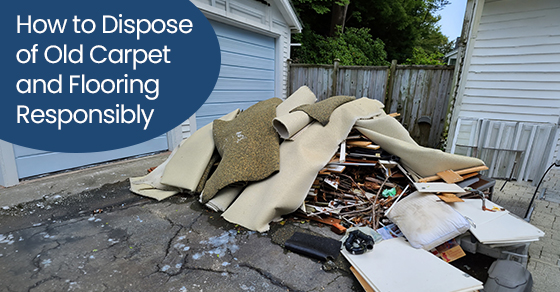
Flooring projects create more waste than many homeowners expect. Old carpet, underlay, tack strips, and leftover flooring pieces can take over a room quickly once demolition starts. Planning carpet disposal before the first section is pulled up helps you avoid delays, reduce clutter, and choose a disposal option that fits the pace of your renovation. It also makes it easier to handle the job responsibly instead of scrambling once the debris is already piled up.
The smoothest flooring removal jobs treat disposal as part of the project plan rather than an afterthought. A little preparation helps you keep the work area cleaner and avoid mid-renovation interruptions.
Start by looking at how many rooms are being stripped and how much material each one will produce. Carpet rolls are bulky even before you account for underpadding, and the waste volume grows fast once you stack everything together. Measuring square footage gives you a baseline, but it is smart to leave extra room so you are not caught short partway through the job.
Try to line up disposal with the demolition phase instead of waiting until the material has been sitting around for days. For a one-room job, that may mean having the bin ready the same day the carpet comes up. For a larger renovation, it helps to plan for steady loading across several days so the worksite stays usable and the debris does not spread into other rooms.
Preparing the material before you carry it out saves time and strain. Cut carpet into manageable strips, roll and tie each section, and separate underlay or other flooring materials where you can. Smaller, contained bundles are easier to move through the house and easier to stack neatly once they reach the bin.
The best disposal method depends on the scope of the renovation. Small projects can sometimes be handled through repeated drop-off trips, but that takes time, vehicle space, and coordination. A bin rental gives you a central place to load at your own pace, which is often more practical for whole-room or multi-room flooring removal. It is also worth noting that this is different from junk removal, since we provide the bin and you handle the loading.
Carpet disposal gets easier when the waste has somewhere to go right away. That is one reason bin rentals fit renovation work so well.
Renovation schedules rarely move in a perfectly straight line. If you uncover repairs, pause between rooms, or spread the work across a weekend, a bin lets you load debris as the project unfolds instead of trying to coordinate every step around a pickup window.
Old carpet, underlay, laminate pieces, and torn-up flooring all take up more room than they seem to when they are still installed. A bin gives you capacity for awkward, heavy material so you are not trying to cram it into a smaller disposal setup that was never meant for renovation waste.
A dedicated container keeps torn flooring, dust-covered rolls, and loose offcuts from drifting around the property. That makes the work area safer, cuts down on clutter, and gives you one consistent place to move waste as each stage of the renovation wraps up.
That flexibility works whether you are tackling the project yourself or coordinating trades. Homeowners can load on their own schedule, and contractors can keep material moving without stopping the rest of the job to deal with disposal every few hours.
Responsible disposal still matters after the carpet is out. Some materials may need different handling, and not every waste stream works the same way.
Old carpet usually is not a good fit for regular household garbage because of its bulk alone. Large rolls, underpadding, and related flooring waste can overwhelm smaller disposal methods quickly, which is why planning for a larger-volume option often makes the job far more manageable.
If you can separate carpet, underpadding, and other flooring materials during removal, the load is easier to sort and handle. Even simple separation helps you keep the cleanup organized and makes it easier to ask the right questions about disposal before the bin arrives.
When you are not sure how a mixed flooring load should be handled, the safest move is to confirm it in advance. That helps you avoid assumptions, reduce the risk of loading the wrong material, and keep the project moving without last-minute disposal problems.
Across Toronto, Scarborough, the Beaches, Leaside, Pickering, and Ajax, flooring updates are a common part of home refresh projects, especially when older carpet no longer suits the space. In dense neighbourhoods and busy driveways, disposal planning matters just as much as demolition planning. A bin rental can help keep renovation waste contained and make it easier to move through the project without constant trips or clutter.
Leaving disposal until the carpet is already piled up can slow the renovation down and turn a clean work zone into a crowded one. Planning earlier gives you better timing and fewer interruptions.
Carpet waste looks manageable while it is flat on the floor, but once it is cut, rolled, and stacked, it takes up far more space. A rough estimate that is too low can leave you short on capacity when the job is halfway done.
Homeowners sometimes assume bin rental and junk removal are the same service. They are not. With a bin rental, you have time to load at your own pace, which is often a better fit for a renovation than arranging labour-based pickup.
Trying to move full-room carpet sections without cutting or bundling them first makes the job harder than it needs to be. A little prep makes removal cleaner, safer, and easier to manage from room to room.
Planning carpet disposal early can keep a flooring renovation cleaner, faster, and far less frustrating. When you estimate the waste, prepare the material properly, and choose a disposal setup that matches the scope of the project, the entire job runs more smoothly. Reach out to Scarborough Disposal today at (647) 905-5145 or click here to get in touch online.
Usually not for larger amounts. Carpet is bulky, and even a single room can create more waste than a regular garbage setup can handle comfortably.
Cut it into manageable strips, roll each section tightly, and tie it before carrying it out. Working in smaller sections is easier than trying to move one large piece.
That depends on how many rooms are involved and whether you are disposing of underlay or other flooring at the same time. Estimating the full scope of the renovation gives you a better starting point.
Some carpet materials may have specialized recycling routes, but that depends on what the carpet is made of and what handling options are available. It is best to confirm current disposal options before assuming it can be recycled.
Not always. If you want to remove the carpet yourself and load debris on your own schedule, a bin rental can be the more practical fit.