


Call us on:
+1 (416) 265-7979
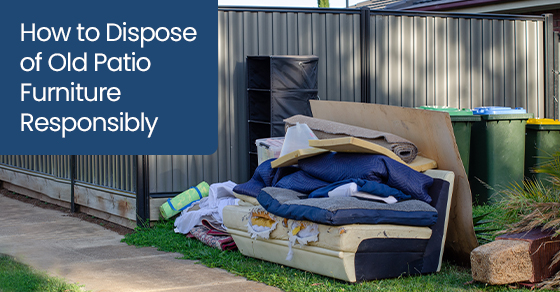
Old patio furniture can be awkward to deal with. A chair may still be usable but badly faded, a table might have suffered years of weather exposure, or an entire outdoor set may simply no longer suit your space.
Responsible furniture disposal starts with looking at each piece before deciding where it should go. Some items may still be useful, while others could be suitable for donation, recycling, or disposal. The right choice depends on the furniture’s condition, materials, and whether it has a realistic second life.
There isn’t one disposal method that works for every chair, table, or lounger. Before moving anything, take a few minutes to assess what you have and separate usable furniture from pieces that are genuinely at the end of their useful life.
That simple review can keep reusable or recyclable materials from being discarded unnecessarily and make a larger outdoor cleanout easier to organize.
Visible wear doesn’t automatically make patio furniture unusable. Faded finishes, surface dirt, or other cosmetic issues may affect how a piece looks without preventing it from serving its original purpose.
Check the structure first. If the furniture is still practical to use, cleaning it, making a minor repair, or repurposing it elsewhere on the property may extend its life.
Use common sense with badly deteriorated pieces. Not every damaged chair or table can be repaired safely, and there’s little value in keeping something that no longer serves a practical purpose.
Furniture that you no longer want may still be useful to someone else. Donation can be worth considering when chairs, tables, or other pieces remain in usable condition.
Before loading bulky furniture into a vehicle, confirm that the intended organization, community group, or recipient accepts that particular type of item. Donation requirements vary, including standards for condition and the types of furniture accepted.
Checking first prevents an unnecessary trip and helps you decide whether donation is genuinely appropriate for the piece.
Patio furniture can contain metal, plastic, wood, fabric, or a combination of several materials. That composition can affect whether and how a particular piece is recyclable.
If you’re trying to recycle furniture, identify the main materials before choosing a destination. A single-material metal chair may present different recycling considerations than a table made from several permanently connected components.
Don’t assume an entire patio set belongs in a regular recycling stream. Local requirements can vary, so confirm an appropriate recycling option for the material and item before transporting it.
Some patio furniture reaches a point where continued use, donation, or practical recycling isn’t realistic. Significant deterioration, structural damage, or years of outdoor exposure may leave a piece with little useful life remaining.
That doesn’t mean every imperfect item belongs in the garbage. Separate genuinely disposable pieces from furniture that still has a reasonable reuse or recycling option.
Bulky furniture also requires more planning than an ordinary bag of household waste. Before choosing a disposal method, consider the size of the items, their materials, and how you’ll move them.
A rental bin can make sense when you’re clearing several unwanted patio pieces or combining furniture disposal with a broader garage, yard, or household cleanout.
We provide the bin, and you handle the cleanout yourself. We don’t enter homes, move furniture, lift items, or help load the container. Customers are responsible for bringing their own permitted materials to the bin and loading them.
Before putting patio furniture or other materials into the container, confirm that they’re permitted under the applicable rental terms. Acceptance can depend on the item and its materials.
Start with two questions: What is the furniture made from, and what condition is it in? Those answers will usually narrow down whether reuse, donation, recycling, or disposal is the most practical next step.
Mixed-material pieces can require extra consideration because different components may not follow the same recycling or disposal process. It’s better to confirm the appropriate requirements before transporting a heavy table or committing several pieces to a disposal method.
You should also consider the physical side of the job. If furniture is bulky or difficult to move, make sure you can handle it safely yourself or arrange suitable assistance. We supply rental bins but don’t provide lifting or loading labour.
Bin rental and full-service junk removal are sometimes discussed together, but they describe different types of service.
With full-service junk removal, a crew generally removes the unwanted items for the customer. Our service works differently. We deliver a rental bin, and you sort, carry, and load your own permitted materials before we pick the bin up.
Our employees don’t enter the home, carry patio furniture outside, or assist with loading. A rental bin is therefore better suited to homeowners who are comfortable managing their own cleanout and need a container for the disposable materials they’ve already decided to remove.
Responsible furniture disposal doesn’t begin with throwing an old patio set away. First, consider whether each piece can still be used, donated, or recycled. Disposal becomes the next option when the furniture no longer has a practical reuse path and the materials are suitable for the chosen disposal method.
For homeowners in Toronto and the surrounding service areas who are managing a larger cleanout themselves, we offer self-loaded bin rentals for permitted materials. We provide the container while you handle the moving and loading.
Reach out to us today at (416) 265-7979 or click here to get in touch online.
Some patio furniture may be recyclable, but it depends on the materials used and the applicable recycling requirements.
Identify whether the furniture is made from materials such as metal, plastic, wood, or a mixture of components, then confirm an appropriate recycling option. Don’t assume that the complete item can automatically be placed in a standard recycling stream.
Donation may be a good option when patio furniture is still usable and meets the receiving organization’s requirements.
Check acceptance policies before transporting large pieces. Furniture that is badly damaged, deteriorated, or no longer suitable for continued use may need another disposal option.
Possibly, depending on the specific furniture and materials. Confirm the applicable rental requirements before placing anything in the bin rather than assuming every unwanted item is accepted.
Customers are also responsible for moving and loading their own furniture.
No. We don’t enter homes or provide labour to remove, lift, carry, or load furniture.
We provide rental bins for customers who are managing their own cleanout. That differs from full-service junk removal, where workers generally remove items on the customer’s behalf.
We provide bin rentals in Toronto, Scarborough, Beaches, Leaside, Pickering, and Ajax.
Visit our bin rental service page for relevant service information.